
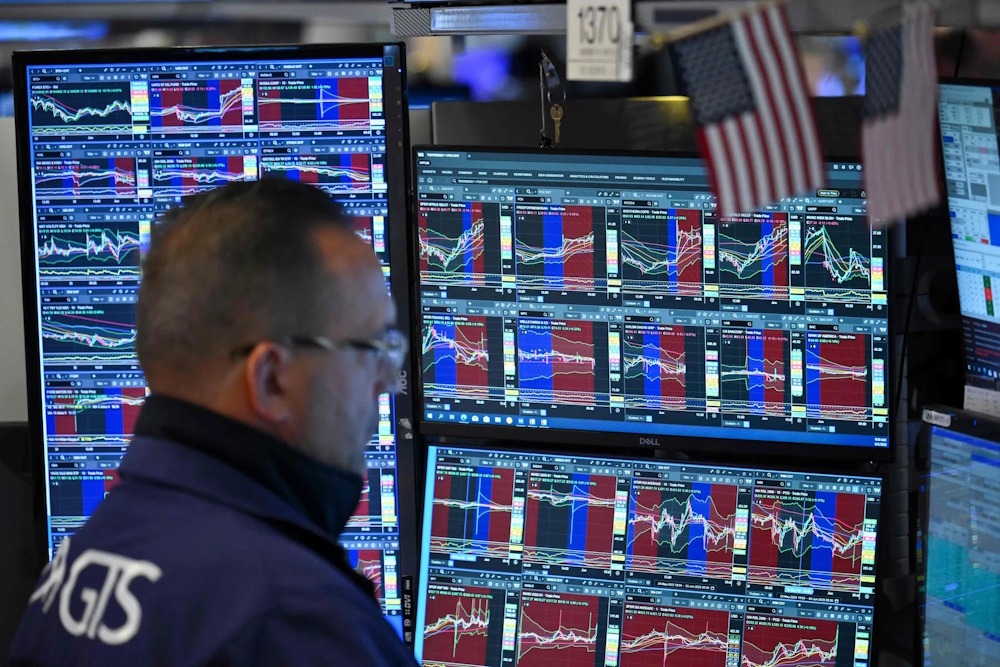
S&P futures experienced a significant decline on Monday following the military actions by the U.S. and Israel against Iran over the weekend. This development led to a spike in oil prices, further complicating an already precarious situation in the Middle East and raising concerns among equity investors. Futures on the Dow Jones Industrial Average declined by 576 points, representing a decrease of 1.2%. S&P 500 futures experienced a decline of 1.1%, while Nasdaq 100 futures fell by 1.4%. Gold futures surged nearly 3% as investors flocked to the global safe-haven asset. The CBOE Volatility Index, often referred to as fear gauge, which is derived from option prices utilized for loss hedging, surged to its peak levels of 2026 to date.
The coordinated strikes by the U.S. and Israel resulted in the death of Supreme Leader Ayatollah Ali Khamenei over the weekend, signifying a pivotal moment for the Islamic Republic and one of its most significant events since 1979. President Donald Trump informed that U.S. military operations in Iran are “ahead of schedule,” yet investors remain concerned about the potential for a prolonged conflict despite these assertions. Iranian officials have committed to a robust response, heightening concerns that the conflict may extend throughout the region. “The tail risk of a sustained conflict is higher than in 2024 or 2025, though we don’t see this war escalating to a point where it drastically changes the US outlook,” stated Ajay Rajadhyaksha. However, he remarked earlier this week, “it is too early to buy any dip, especially with investors accustomed to a pattern of quick de-escalation.”
U.S. crude prices surged nearly 8% as investors expressed concerns that the ongoing confrontation might escalate into a wider conflict, potentially disrupting supply chains. Iran ranks as the fourth-largest oil producer within the Organization of the Petroleum Exporting Countries. The trajectory of the oil market may depend on whether hostilities interfere with traffic through the Strait of Hormuz, which is the most critical chokepoint for crude oil flows globally. A prolonged disruption in that region could have significant implications for global energy markets and potentially rekindle inflationary pressures. “Broader uncertainty suppresses investor sentiment, which can broadly weigh on risk-assets globally,” stated Adam Hetts. “In a prolonged period of uncertainty, increases in oil prices could generate a global inflationary scare.” Northrop Grumman experienced a 5% increase in early trading subsequent to the attacks, while other defense stocks, RTX and Lockheed Martin, saw gains exceeding 6%. Energy shares, including Exxon Mobil and Chevron, experienced an increase of approximately 4% each.
However, a risk-averse sentiment resulted in a decline for the majority of equities, with technology and banking sectors experiencing the most significant losses. Broadcom has driven chip stocks downward. Amazon and Alphabet experienced a decline. Morgan Stanley and Goldman Sachs experienced a decline. The geopolitical escalation exacerbates an already tenuous environment for equities. The S&P 500 experienced a decline on Friday, concluding February in negative territory due to renewed volatility in the artificial intelligence and software sectors. Concerns regarding the potential impact of automation on business models and the likelihood of increasing layoffs have dampened sentiment, leading to apprehensions about possible spillover effects on the wider economy. “All told, we presume a shorter-term impact, but can’t rule out a more protracted friction to equities,” stated strategists. We must categorize this recent volatility event alongside an expanding array of concerns. The AI spending boom appears set to continue; however, the anticipated productivity gains are increasingly confronted by disruptions to business models instigated by AI.