
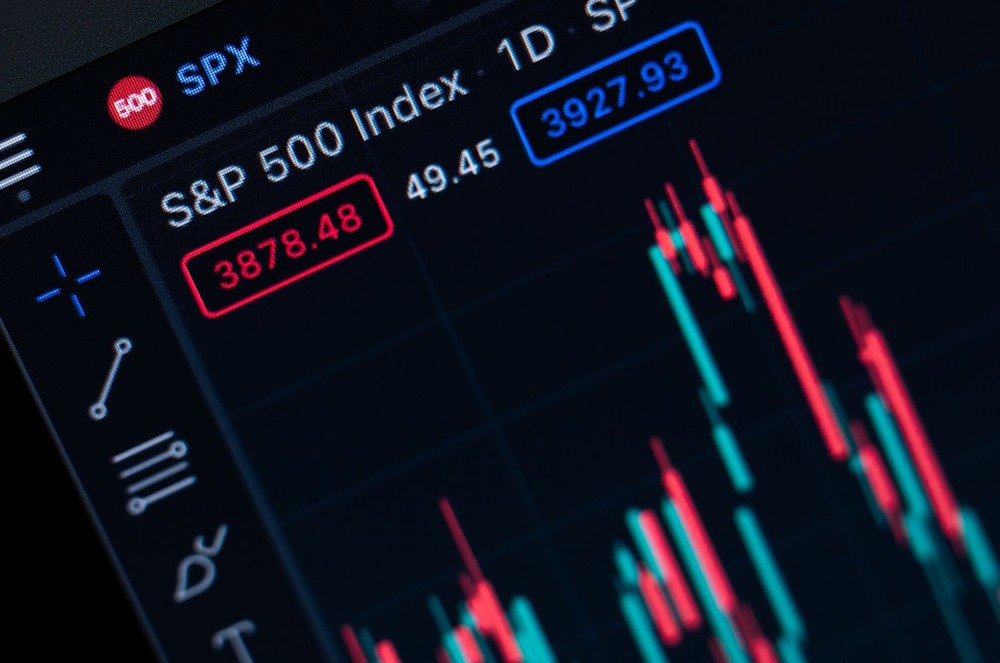
S&P Futures declined on Friday morning as oil prices continued their upward trend after a short dip. Futures for the Dow Jones Industrial Average declined by 130 points, representing a decrease of 0.3%. S&P 500 futures declined by 0.4%, while Nasdaq 100 futures fell by 0.5%. Futures linked to all three major averages indicated a favorable opening earlier in the morning. Stocks experienced a decline on Thursday, yet managed to close significantly above their lowest points following Netanyahu’s statement that Israel was aiding the U.S. “in intel and other means” to facilitate access to the Strait of Hormuz. He stated that Iran had lost the capability to enrich uranium and produce ballistic missiles, emphasizing that the conflict might conclude sooner than many anticipate.
West Texas Intermediate futures experienced a significant decline after the settlement in response to those remarks, providing a lift to stocks from their earlier lows. Nonetheless, WTI is still over 48% higher this month. After a brief decline on Friday morning, oil prices once again began to rise. Global benchmark Brent futures were last observed 1.7% higher at $110.50 a barrel, while WTI futures experienced an increase of 0.7% to reach $96.78. In a note on Friday morning, Deutsche Bank’s Jim Reid stated, “Today will mark the 15th trading day of the conflict so far.” He stated “That is on average when we bottom out in U.S. equities after a geopolitical shock. However, it would be challenging to trade based on averages at this time due to the prevailing uncertainty, making headlines more significant than historical data. Yet, for those seeking optimism, the conventional geopolitical playbook might still offer a glimmer of hope.”
“So far we haven’t deviated from it.” The stock market may experience further volatility on Friday as a result of the quadruple witching event — the quarterly expiration of stock options, index options, index futures, and single-stock futures that takes place four times annually. As trillions of dollars in derivatives come off the board, this event typically results in increased trading volumes and more pronounced intraday fluctuations, driven by investors rebalancing or unwinding their positions. The major averages remain on track to record their fourth consecutive week of losses, however. The S&P 500 and Dow begin Friday’s session with declines of 0.4% and 1.2%, respectively. The Nasdaq Composite has declined by 0.1%. “All the near-term action depends on the Strait opening,” stated Scott Wren. “We believe it will open in a matter of weeks, not months.”
Both the Dow and Nasdaq are approaching correction territory. The Dow is currently 8.3% below its record close established on February 10, while the Nasdaq is nearly 8% away from its all-time closing high, which was reached on October 29. Despite the S&P 500 remaining approximately 5% below its all-time high, Unlimited CEO Bob Elliott believes that the market maintains an overly optimistic view regarding the potential effects of the war on earnings and the economy. “When you look at stocks compared to bonds, the markets are pricing in stronger growth since the beginning of this conflict.” He stated “That doesn’t make any sense,” during an interview: Overtime. Households are essentially experiencing a reduction of approximately 1% to 2% in their real purchasing power, even if this conflict were to end tomorrow.”