
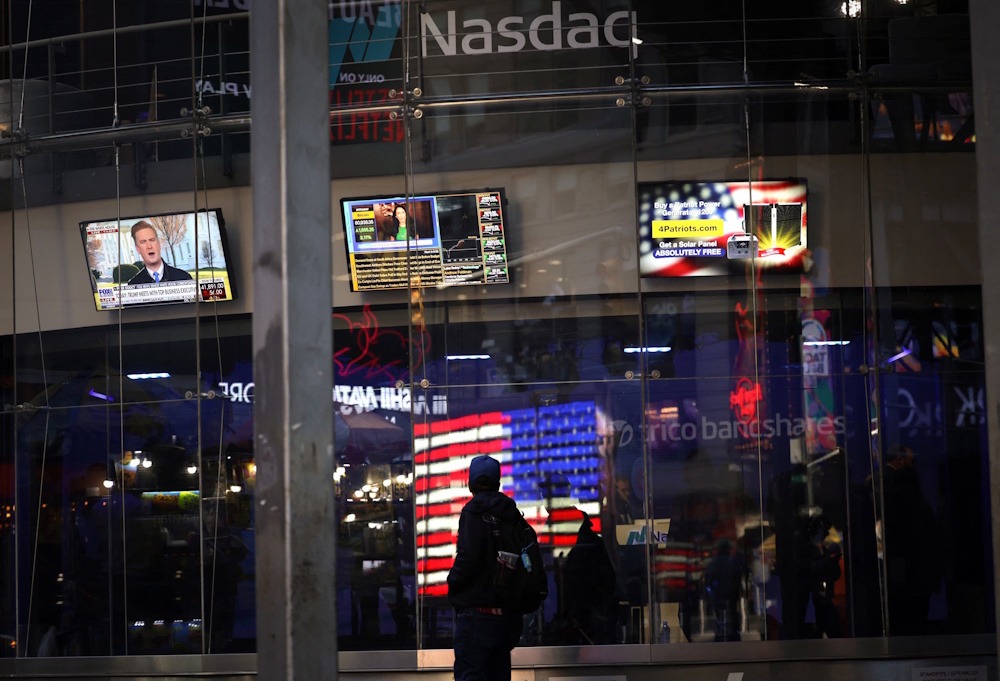
On Wednesday, futures exhibited minimal movement following the recent record highs achieved by the S&P 500 and the Dow Jones Industrial Average. Futures associated with the 30-stock Dow increased by 24 points, representing a change of less than 0.1%. S&P 500 futures declined by 0.1%, while Nasdaq 100 futures experienced a decrease of 0.3%. Equities advanced in Tuesday’s trading as market participants appeared to dismiss concerns regarding the recent U.S. military action in Venezuela over the weekend. The blue-chip Dow surged by nearly 485 points, representing a 0.99% increase, closing above 49,000 for the first time. The S&P 500 achieved a record close, reflecting an increase of approximately 0.6%, while the tech-centric Nasdaq Composite concluded the day with a rise of around 0.7%.
“The market’s response to the Venezuela news highlights the disparity between headline risk and the corresponding price movements. While Maduro’s arrest is a notable geopolitical event, it carries no immediate implications for oil supply — the factor markets truly care about,” said Angelo Kourkafas. “Meanwhile, the pro-cyclical rally that has unfolded since the start of the week reflects supportive fundamentals, including an expected broadening of earnings momentum both within and beyond mega-cap tech,” he added. Nine out of 11 sectors within the S&P 500 concluded the session on an upward trajectory, propelled by advancements in health care and technology, which bolstered the index’s performance. Amazon, a member of the “Magnificent Seven,” and retail investor favorite Palantir, both experienced an increase of over 3% in their closing prices. Data storage companies Sandisk, Western Digital, and Seagate ranked among the top performers in the S&P 500 on Tuesday.
In the future, Paul Christopher indicated that “social calm” will play a crucial role in determining the trajectory of the U.S. stock market. “If the current government does not cooperate with the U.S., or if the military or opposition lose patience awaiting elections, we could see a new round of the country’s long-simmering social chaos — a likely negative for U.S. equities,” Christopher stated. “If the U.S. can assist the Venezuelan people in optimizing their oil resources and fostering transparent elections, there exists an opportunity for the U.S. to support Venezuela and enhance economic relations between the U.S. and Latin America — a potentially favorable outcome for U.S. markets,” he stated.
Oil prices experienced a decline on Wednesday following President Donald Trump’s announcement regarding the U.S. intention to import $2 billion worth of Venezuelan crude. West Texas Intermediate futures decreased by 28 cents, representing a decline of 0.5%, settling at $56.85 per barrel. Brent experienced a decline of 11 cents, equivalent to 0.2%, settling at a price of $60.58.