
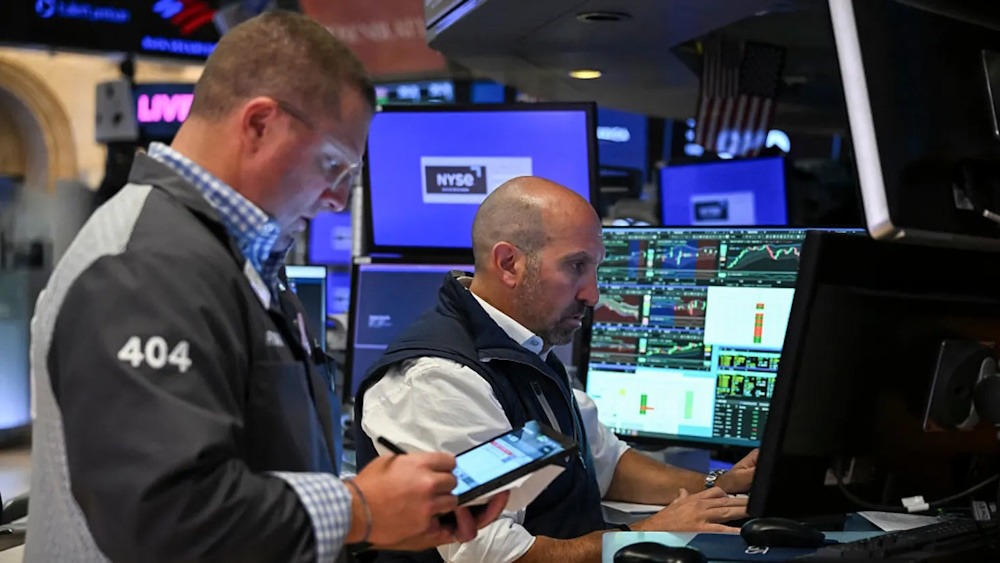
S&P 500 futures experienced a slight uptick on Wednesday following a shift by traders away from technology stocks, which led to a decline in the overall market index during the previous session. Futures associated with the broad market index increased by 0.2%, whereas futures for the Dow Jones Industrial Average gained 116 points, equivalent to a 0.2% rise. Futures for the Nasdaq 100 experienced a decline of 0.1%. In premarket trading, shares of Advanced Micro Devices declined by 9% following a first-quarter forecast that failed to meet the expectations of certain analysts. Chipotle experienced a decline, with shares dropping 6% following the restaurant chain’s report of decreasing traffic for the fourth consecutive quarter and its forecast of flat same-store sales growth for 2026. Furthermore, U.S.-listed shares of Norvo Nordisk experienced a decline of 5% following the drugmaker’s pre-release of its 2026 forecast late Tuesday, indicating that a swift recovery is not anticipated. CEO Mike Doustdar conveyed that “people should expect that it goes down before it comes back up.”
The averages experienced a decline in the previous session as investors shifted their focus from riskier growth stocks to more stable cyclical stocks such as Walmart. The S&P 500 experienced a decline of approximately 0.8%, whereas the Nasdaq Composite, which is heavily weighted towards technology, fell by 1.4%. The 30-stock Dow declined by approximately 167 points, representing a decrease of 0.3%, following its achievement of a new record earlier in the day. “Yesterday marked a significant acceleration of the recent trend, indicating that the nine worst-performing companies in the S&P 500 year-to-date are all situated within the software and related services sectors, each experiencing declines of 25% or more,” stated Jim Reid. “While the question regarding the ultimate beneficiaries of AI is unlikely to be resolved by 2026, recent months have demonstrated a distinct transition in markets from exuberance surrounding AI to a more nuanced differentiation among companies, coupled with increasing apprehension about its potential disruption to established business models,” he added.
Nvidia and Microsoft experienced declines exceeding 2%. Prominent players in the artificial intelligence infrastructure sector, including Broadcom, Oracle, and Micron Technology, also finished the trading session with losses. The technology sector exhibited the poorest performance within the S&P 500, declining by over 2%. “I think you have a number of cross-currents that are impacting the markets all at once,” stated Joe Tanious. “Conversely, I maintain that the fundamental factors remain intact.” He stated “Currently, markets are becoming increasingly selective and discerning regarding the companies they wish to invest in. It is important to recognize that following a three-year market rally characterized by double-digit returns, valuations tend to become somewhat elevated.” It will require minimal effort to provoke that bear and observe market capitulation, akin to the current situation.
On Wednesday, investors will closely monitor labor data as ADP is set to publish its monthly assessment of private payroll growth for January. Economists surveyed anticipate that the forthcoming report will indicate an increase of 45,000 jobs, in contrast to the 41,000 reported for December. The release typically occurs prior to the Bureau of Labor Statistics report on nonfarm payrolls; however, this week will not see its publication due to the ongoing partial government shutdown. A packed earnings week is in progress, with Alphabet expected to announce its results on Wednesday and Amazon on Thursday.