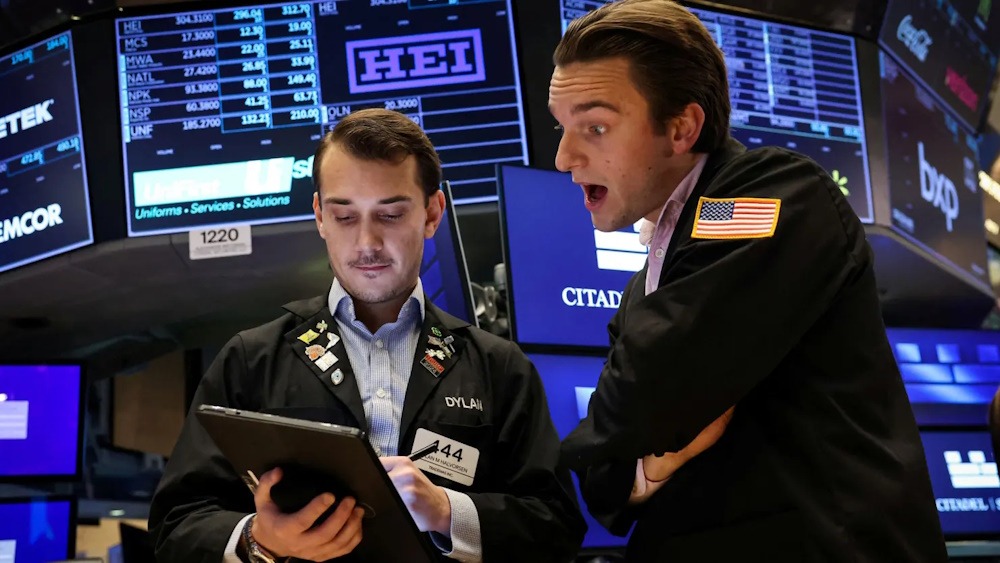
Stock futures experienced an uptick early Monday, primarily driven by a rebound in the technology sector after the previous week’s decline in stocks associated with the artificial intelligence trend. Nasdaq 100 futures experienced an increase of 1.1%. S&P 500 futures increased by 0.5%. Futures for the Dow Jones Industrial Average hovered just beneath the neutral mark. Intel advanced more than 4% in premarket trading following an upgrade in rating by JPMorgan analysts on the chipmaker. CoreWeave, a key player in Neocloud, experienced a significant decline of over 25% last week, marking its largest weekly drop since November 2025, primarily due to concerns surrounding debt. However, it has since rebounded with a 3% increase. AMD and Micron experienced an increase of over 2% each.
The S&P 500 experienced a decline of nearly 2% last week, marking its most significant weekly drop since late June. The Nasdaq experienced a decline of 4.5%, effectively ending a four-week period of gains. Concerns regarding the viability of the AI trade have emerged prominently following a report, which, according to sources, indicated that Anthropic’s revenue for the third quarter reached $16.8 billion. And while that’s an increase from $11.6 billion in the second quarter, it raised concerns among investors regarding the speed of growth associated with the AI build-out. Participants in the corporate bond market are increasingly distancing themselves from CoreWeave, as evidenced by the company’s credit default swaps hitting levels indicative of distress. Goldman Sachs traders noted Friday: “AI Credit Spreads and hyperscalers specifically are at the widest levels of the year. The last time spreads were nearly this high, the underlying equities were 15% lower.”
“The widening across the complex has forced investors to confront what happens as AI spending growth slows. AI Capex has likely peaked and financing, sustainability, and returns on capital have become the debate rather than the next near term earnings revision,” they said. “Pessimism is increasing, market breadth is low, and [Friday] we saw the second highest amount of puts traded (right behind June of this year).” Traders maintained a cautious stance regarding oil markets, as incidents of ship attacks in the Persian Gulf increased, alongside Ukraine and Russia engaging in assaults on energy infrastructure. On Sunday, Ukraine targeted an oil terminal located in St. Petersburg, Russia. Longer-dated oil futures have started to increase in value as expectations grow that disruptions to energy infrastructure could persist well into 2027.
On Sunday, Brent and WTI crude futures were both experiencing a slight decline. A slew of earnings from major companies such as Meta Platforms and Tesla hit the Street this week, with optimism that those results will stabilise the market. Across the Atlantic, the Stoxx 600 declined by 0.82% on Monday as European stock markets entered negative territory. France’s CAC 40 experienced a significant decline, falling 1.35%, as nationwide protests regarding elevated living costs escalated into violence over the weekend. The U.K.’s FTSE 100 experienced a decline of 0.94%, while the German DAX recorded a loss of 1.1%. In Asia, South Korea’s benchmark Kospi increased by 1.76%, while Australia’s S&P/ASX 200 saw a gain of 0.44%. Conversely, Japan’s Nikkei 225 finished 0.62% lower. Mainland China’s CSI 300 concluded the session unchanged at 4,174.53.