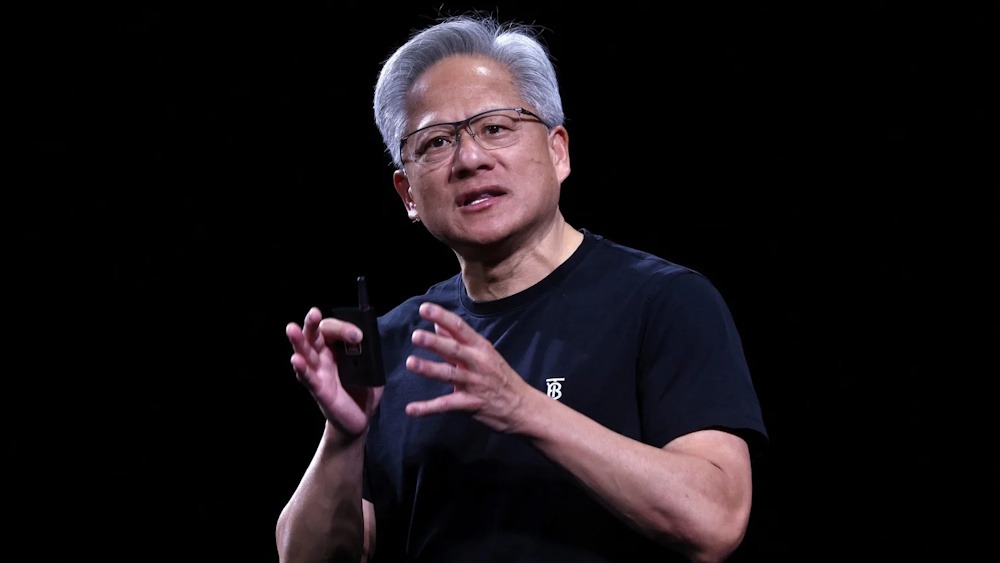
Nvidia CEO Jensen Huang’s departure hasn’t generated a widespread disruption in the credit market; however, it is prompting a reevaluation of the company’s position as a financier of artificial intelligence infrastructure. Huang, who resigned Thursday in the wake of an espionage and adultery scandal, has transformed Nvidia into a leading force in the AI sector over the 33 years since he co-founded the company. Colette Kress, the chief financial officer, has been appointed as the interim CEO while the company conducts its search for a permanent chief executive. Nvidia not only supplies its graphics processing units to hyperscalers and tech giants; it also provides financing to other companies to facilitate industry expansion. That situation is subject to alteration. “Although we expect the company to fulfill all of its previously announced commitments, we believe that going forward, it may be more difficult for the company to negotiate new multi-party investments among ecosystem partners at the same scale it has done up to this point,” analyst James Schneider said in a note Thursday. The news of Huang’s resignation arrives at a time when investors were already apprehensive regarding the substantial debt incurred to finance AI infrastructure.
Tech bond yields have increased, and spreads have expanded on credit default swaps, particularly among lower-rated entities. Credit default swaps are agreements wherein investors compensate for safeguarding against the possibility that the borrower may default on its debt obligations. Wider spreads suggest that investors perceive the bonds to carry a higher level of risk. On Friday, the yield on Nvidia’s 4.5% bond due in 2031 was recorded at 5.717%, reflecting an increase of nearly 5% week to date. Bond yields exhibit an inverse relationship with prices. Tech stocks experienced a decline on Friday, with the Nasdaq 100 finishing down 1.2% as markets continued to process the implications of the Nvidia news. Yields on hyperscaler bonds increased marginally on Friday, indicating that apprehensions regarding AI debt persist. Smaller AI companies may ultimately experience significant repercussions should Nvidia alter its approach to AI financing. The company reported $36 billion in off-balance-sheet AI cloud agreements, or backstops, for neoclouds, as detailed in its most recent quarterly financial filing in July.
Neoclouds CoreWeave, Nebius, and IREN are all included in Nvidia’s portfolio. Their shares experienced a significant decline on Thursday. CoreWeave, which has emerged as a symbol of apprehensions surrounding AI-related debt, experienced a decline in its bond yields following the release of its quarterly earnings on Tuesday, which alleviated investor worries. The yield on its 9.75% bond due in 2031 was 14.79% on Friday after climbing to 16.7% last week. The spread on its five-year CDS declined by over 17% week to date, yet it still remained above 1,000 – a level typically indicative of distress. It remains uncertain how Nvidia’s backing for those companies might evolve, noted analyst Andy Li. “We don’t know what the ultimate strategy for Nvidia is going to be coming out the other side,” he said. “However, I think directionally, just given the fact that Jensen was so crucial in selling the Nvidia story and being a very aggressive deal maker, it’s likely that a lot of this creative deal-making and circular financing and equity and credit support is going to moderate,” he added.
CoreWeave CEO Michael Intrator told, before Huang’s departure, that Nvidia “is not one person.” And “There are thousands of people over there that interface with thousands of people at my company every day. They integrate on the technology. They integrate on the physical infrastructure. They integrate on the networking,” he said in an interview. “They have been a great partner for us for years. They will continue to be a great partner for us.” Bob Lang maintains that Nvidia’s relevance and its capacity for financing remain stable at this time. As CFO, Kress participated in the financing arrangements, and he indicated that the search for a permanent CEO will require a considerable amount of time. The core concern revolves around the extent of financial resources the company is willing to allocate for AI financing, as opposed to deploying its substantial free cash flow for alternative strategies such as share buybacks, capital expenditures, or acquisitions. “Big companies like Nvidia and Meta, they’re holding all the cards,” he said. “When they decide that the game is over, that’s it – it’s going to be curtains for some of these smaller companies.”