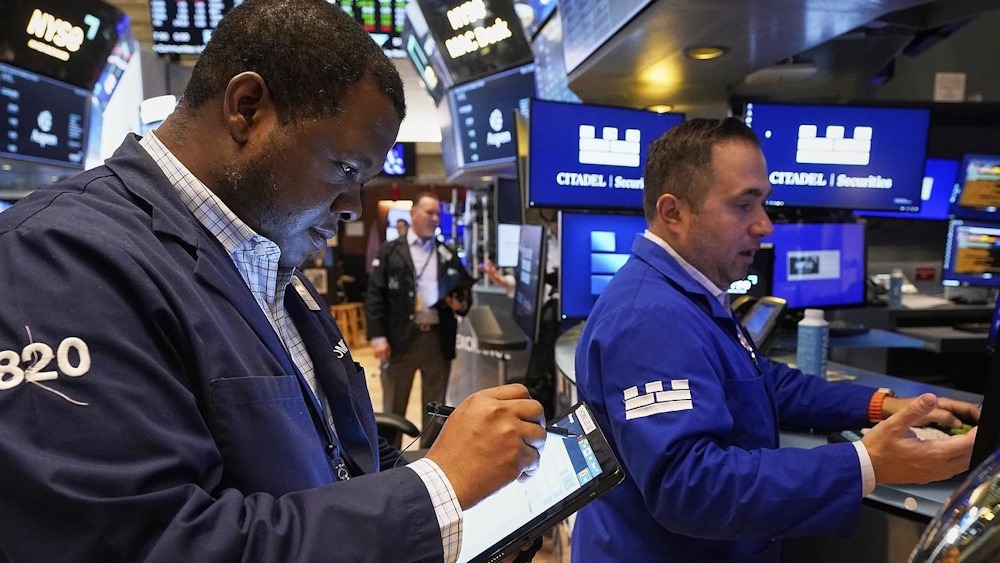
S&P futures exhibited a notable increase early Friday, demonstrating stabilisation following a challenging session characterised by a significant rise in oil prices and disappointing earnings reports from two major corporations, which weighed on the overall equity market. S&P 500 futures increased by 0.2%, whereas Nasdaq-100 futures rose by 0.1%. Futures for the Dow Jones Industrial Average exhibited a notable increase, rising by 268 points, which corresponds to a 0.5% gain. The Dow on Thursday declined by over 500 points, representing approximately 1%, marking its fifth negative session in six days. The S&P 500 and Nasdaq experienced their most significant one-day declines since June 23, with decreases of 1.2% and 2.2%, respectively. U.S. President Donald Trump indicated that he will soon determine whether to initiate a “massive attack” on Iran, following the escalation of conflict in the Middle East to a new front in the Red Sea.
In an interview on Thursday, the president indicated that the planned strikes would surpass any previously witnessed in the conflict, asserting that Iran has not yet experienced sufficient repercussions. Trump stated in the interview, “I am considering a massive attack. Bigger than ever before. I am close to making a decision. We are all set for it,” Trump said in the interview. U.S. forces have conducted extensive operations against Iranian targets over the past fortnight, with Central Command executing a 13th consecutive night of strikes overnight. Meanwhile, European stocks opened broadly higher on Friday, reflecting an improvement in investor sentiment across the continent. Shortly after the opening bell, the pan-European Stoxx 600 index was observed to be 0.2% higher, with regional bourses and sectors presenting a varied landscape. London’s FTSE 100 remained unchanged, whereas France’s CAC 40 experienced a modest increase of 0.1%, and Germany’s DAX saw a rise of 0.4%. In Asia, the Asia-Pacific markets concluded the trading session in negative territory, with South Korean equities at the forefront of the declines.
The Kospi experienced a decline exceeding 5.7%. Japan’s Nikkei 225 experienced a decline of 2.7%. Australia’s benchmark index experienced a decline of 0.75%. Brent crude futures this week surpassed the $100 per barrel mark for the first time since late May, before retreating on Friday to approximately $97.75. “While current positioning does not guarantee that oil will continue rising, it does mean that the market entered the latest escalation poorly positioned for an upside surprise,” Adam Turnquist. “And when sentiment and positioning are extremely bearish, even a modest deterioration in supply expectations can produce an outsized price response.”
Quarterly results from Tesla and Alphabet exerted pressure on the broader market. Tesla tumbled nearly 15% — its worst day since March 10, 2025 — after posting an earnings miss for the second quarter. Alphabet increased its full-year guidance for capital expenditures, resulting in a 7% decline for the tech giant. That represents the most significant daily drop since May 7, 2025. Thursday’s movements positioned the major averages for weekly declines. The Dow and S&P 500 have declined by 0.8% and 0.7%, respectively. The Nasdaq has exhibited underperformance, registering a decline of 1.5%.