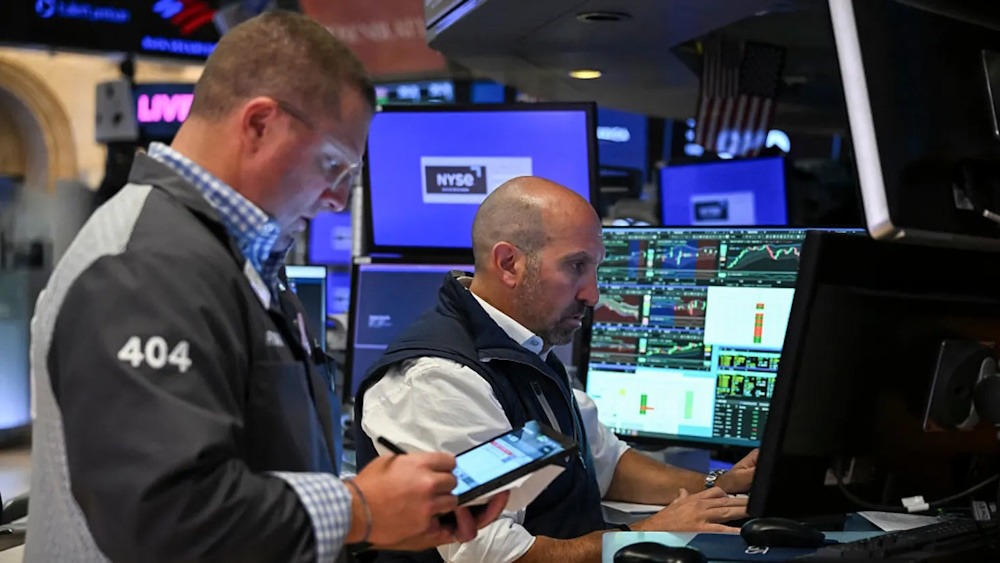
Futures linked to the Nasdaq-100 experienced a decline in early trading on Tuesday, as semiconductor stocks faced another downturn. Investors are preparing for a significant week ahead, marked by earnings reports from major companies and a decision on interest rates from the Federal Reserve. Nasdaq-100 futures experienced a decline of 0.9%.S&P 500 futures experienced a decline of 0.1%.Futures for the Dow Jones Industrial Average increased by 123 points, representing a 0.2% rise. The VanEck Semiconductor ETF shed 3%, with declines of 5% observed in both Micron and Western Digital. Seagate Technology and Astera Labs experienced declines during the trading session. Wall Street is emerging from a volatile trading session. The 30-stock Dow advanced more than 260 points, while the S&P 500 recorded a modest increase.
The Nasdaq Composite experienced a decline on Monday, primarily due to a pullback in semiconductor stocks that impacted the tech-heavy index. This downturn subsequently affected Asian markets, with South Korea’s Kospi facing a temporary halt after a significant drop of 11%. On Monday, SMH experienced a decline of 3.3%, representing its third consecutive session of losses. The tension in the market indicates a prevailing uncertainty as we approach a significant week for equities, marked by anticipated earnings results from Amazon, Meta Platforms, and Microsoft on the schedule. The chip trade is contingent upon sustained expenditure from the hyperscalers, despite the challenges faced by the mega-cap companies themselves. Apple is scheduled to report its earnings this week.
A Federal Reserve rate decision is anticipated on Wednesday. Investors anticipate that the central bank will maintain its current stance, while seeking increased clarity regarding the future trajectory of monetary policy. Fed funds futures indicated a quarter point hike in September, as per the CME FedWatch Tool. “Our call is for no change,” Padhraic Garvey, said in a Tuesday morning note. “We see inflation expectations tame enough for comfort. Also, the structure of the curve does not shape up for a rate hiking cycle. Specifically, the 5yr is rich to the curve.”
“It’s unusual for the Fed to start a rate hiking cycle with the 5yr rich to the curve. If we’re wrong and the Fed does hike (whether at this meeting or the next), the curve structure suggests that any hikes delivered will be subsequently reversed, and the funds rate ends up lower than it is today within a 12-month window.”