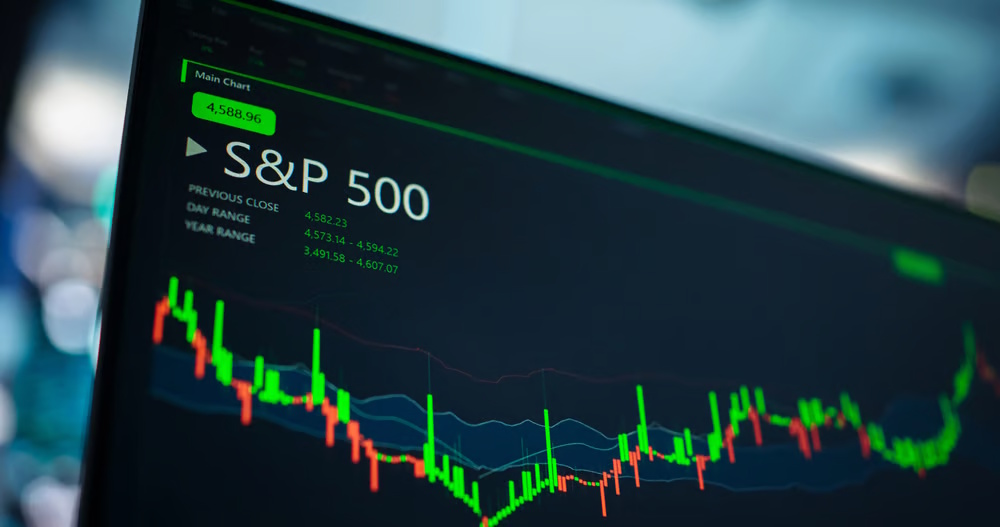
S&P futures experienced an uptick on Monday as oil prices declined, indicating Wall Street’s attempt to rebound from a predominantly negative week. Futures for the Dow Jones Industrial Average increased by 407 points, representing a rise of 0.8%. S&P 500 futures and Nasdaq-100 futures increased by 0.7% and 1.1%, respectively. U.S. crude experienced a decline of 3%, settling at $97.09 per barrel. International benchmark Brent declined by over 3% to $100.50. Those moves follow the recent escalation in hostilities in the Middle East over the weekend. The Iran-backed Houthis announced their assault on Saudi Arabia using missiles and drones on Saturday.
Later in the day, the U.S. State Department cautioned Americans to reassess their travel plans to the Middle East as tensions escalated between the U.S. and Iran, with both nations exchanging threats of renewed attacks. However, analysts at JPMorgan observed recently that oil flows “remain surprisingly strong” despite the recent disruptions. The Dow experienced a decline of 1.7% last week, marking its most significant downturn since March. The S&P 500 experienced a decline of approximately 0.1%. Only the tech-heavy Nasdaq recorded an increase, rising by 0.7%.
The Federal Reserve raised interest rates last week for the first time in three years, as the U.S. grapples with persistent inflation and high bond yields. Oil prices continue to hover around the $100 per barrel mark. The 10-year Treasury yield is currently positioned near 5%. That could elevate the importance of a pivotal summit this week between U.S. President Donald Trump and Chinese President Xi Jinping, which will address tariffs, critical minerals, artificial intelligence, and various economic matters.
Treasury Secretary Scott Bessent engaged in discussions with Chinese Vise Premier He Lifeng prior to the upcoming visit. “The same geopolitical conflict inflating energy prices is also what’s keeping the Federal Reserve hawkish and what’s squeezing Chinese refiners,” wrote Jeffrey Roach. Fed Chairman Kevin Warsh’s committee “has conditioned its inflation outlook on oil markets settling down, and Beijing’s fiscal calculus runs through the same variable.”