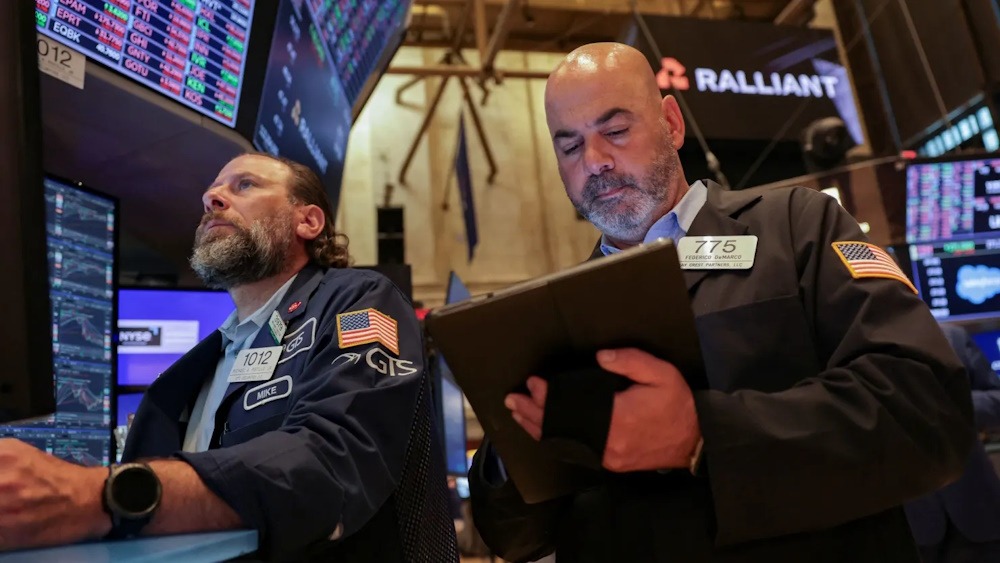
S&P futures declined at the beginning of Monday, influenced by a rise in oil prices and an increase in Treasury yields as the week commenced. Futures for the Dow Jones Industrial Average declined by 242 points, representing a decrease of 0.5%. S&P 500 futures declined by 0.5%. Nasdaq-100 futures experienced a decline of 1%. Brent crude experienced an increase of over 4%, reaching a price of $108.68 per barrel. West Texas Intermediate futures experienced an increase of approximately 4%, reaching $96.30, following President Donald Trump’s dismissal of the ceasefire conditions proposed by Iran.
Treasury yields continue to reflect the significant fluctuations observed last week. The benchmark 10-year Treasury note yield was observed trading above 5.2%. The yield on the 30-year bond has surpassed 5.5%. Both were positioned near multiyear highs. In Asia, Japan’s Nikkei 225 finished 0.73% lower, whereas South Korea’s Kospi fell by 2.7% to 6,889.74. Australia’s benchmark index experienced an increase of 0.17%. Mainland China’s CSI 300 concluded the trading session with a decline of 2.22%. European stocks exhibited a general upward trend early Monday, as evidenced by a 0.37% increase in France’s CAC 40 index. The U.K.’s FTSE 100 rose 0.46% as housebuilding stocks surged on the announcement of a new government loan scheme for first-time buyers.
Wall Street has concluded a successful week, buoyed by the strong performance of technology and technology-related companies. Meta Platforms experienced a notable increase of nearly 13% during that period, as market participants expressed enthusiasm for the company’s Muse artificial intelligence agent. Microsoft experienced an increase exceeding 4%, whereas both Apple and Nvidia saw gains of over 1% each. Those gains occurred despite Treasury yields reaching levels not observed in years, as traders heightened their expectations for additional Federal Reserve rate hikes in response to ongoing inflationary pressures. The benchmark 10-year Treasury note yield reached a level not observed since 2007. The 30-year bond yield has attained a peak not seen since 2004. The yield on the 2-year note experienced a significant increase of approximately 17 basis points last week.
“The rapid rise in 2-year government note yields worldwide signals that major central banks need to raise their policy rates further in response to the inflationary impact of higher-for-longer oil prices resulting from the recent re-escalation of the Middle East war,” wrote Ed Yardeni. “Unfortunately, these higher rates also exacerbate the outlook for large government deficits worldwide.” Rates will be a focal point once more this week, as a series of significant economic data is set to be released. The August personal consumption expenditure price index, which serves as the Federal Reserve’s preferred measure of inflation, is scheduled for release on Wednesday. New U.S. manufacturing figures are anticipated on Thursday, while the highly scrutinised jobs report for September is scheduled for publication on Friday.